Fire Extinguisher Inspection Requirements for Commercial Buildings
Quick Answer
Commercial buildings must conduct monthly visual fire extinguisher inspections by trained staff and annual maintenance inspections by certified professionals. NFPA 10 also requires internal examinations every six years and hydrostatic testing every five or twelve years depending on extinguisher type. Documentation must be retained for compliance audits.
Why This Matters for Your Building
A fire extinguisher that fails during an emergency is not just a code violation. It is a liability event that can shut down operations, void insurance claims, and put lives at risk. Fire marshals, OSHA inspectors, and insurance adjusters all check extinguisher records, and a missing tag or expired inspection can trigger fines starting at several hundred dollars per device and escalating quickly.
Beyond compliance, the operational stakes are real. A discharged or depressurized extinguisher during a small electrical fire in a server room or a grease flare in a break room can turn a minor incident into a six-figure loss. Inspection is the only way to know your equipment will actually work when it is needed.
NFPA 10: The Standard Behind the Requirements
NFPA 10 is the National Fire Protection Association standard that governs portable fire extinguishers. It is adopted by reference in most state and local fire codes, which means compliance is not optional. The standard breaks inspection into three distinct activities that occur on different schedules.
Monthly Visual Inspections
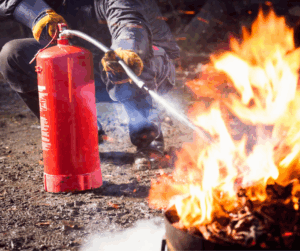 Conducted in-house by a designated staff member, monthly inspections verify the basics:
- The extinguisher is in its assigned location and visible
- Access is not blocked by inventory, equipment, or furniture
- The pressure gauge needle is in the green operating range
- The pull pin and tamper seal are intact
- No physical damage, corrosion, or leakage is visible
- The inspection tag is legible and current
Annual Maintenance Inspections
This is a hands-on internal and external check performed by a licensed fire equipment professional. The technician verifies the extinguisher’s mechanical condition, weighs cartridge-operated units, examines the discharge hose, and confirms the extinguishing agent is still serviceable. A new annual tag is affixed, and any deficiencies trigger immediate service.
Six-Year Internal Examination
Stored-pressure extinguishers must be fully discharged, disassembled, and internally inspected every six years. Components are examined for corrosion, the agent is replaced if degraded, and the unit is reassembled and recharged.
Hydrostatic Testing
Pressure vessels weaken over time. Hydrostatic testing pressurizes the cylinder with water to confirm structural integrity. Dry chemical extinguishers require this every twelve years. CO2, water, and wet chemical units require it every five years.
Common Mistakes That Cost Buildings Money
Even safety-conscious facilities slip on extinguisher compliance. The patterns are predictable.
- Skipping monthly inspections. Many facility managers assume the annual professional service covers everything. It does not. A missing month of documented inspections is a citation in most jurisdictions.
- Using untrained staff for inspections. The person conducting monthly checks must be trained on what to look for. Random walk-throughs by an untrained employee do not satisfy NFPA 10.
- Blocking extinguisher access. Pallets, holiday displays, filing cabinets, and even seasonal decor are common offenders. NFPA requires unobstructed access at all times.
- Wrong extinguisher class. Placing a Class A water extinguisher near a fryer or electrical panel is dangerous and out of compliance. Hazard surveys should drive placement.
- Letting tags expire. An expired annual service tag is the single most common citation issued during fire marshal walkthroughs.
- Not retaining records. Inspection logs must be kept for at least one year, and many insurers want longer retention. Lost records during a claim investigation can void coverage.
The consequences range from fines and forced shutdowns to denied insurance claims after a fire. In one recent case, a regional distribution center lost a six-figure inventory loss claim because their extinguisher service records had lapsed for fourteen months.
In-House Inspection vs Professional Service
Both are required, and they serve different functions. Confusing the two is one of the most common compliance gaps.
In-House Monthly Inspection
- Performed by trained facility staff
- Visual only, no disassembly
- Takes a few minutes per device
- Documented on a log or with QR-coded tags
- Cannot substitute for annual professional service
Professional Annual and Multi-Year Service
- Performed by a state-licensed fire equipment technician
- Includes mechanical inspection, internal examination, and recharge as needed
- Required for six-year and hydrostatic services
- Generates the official tag that fire marshals look for
- Carries professional liability and documented certification
Trying to perform annual or internal services in-house is not just non-compliant. It can render the extinguisher unsafe and expose the building owner to liability if the unit fails. Partnering with a licensed provider like Wilson Fire Equipment ensures every inspection level is handled correctly and documented for audits.
Building a Defensible Inspection Program
A compliant program has four components. Miss any one and you have a gap.
- Written procedure. A documented inspection protocol that names responsible parties, defines the inspection checklist, and specifies record retention.
- Trained personnel. Staff conducting monthly inspections need documented training. Many fire equipment providers offer this directly.
- Licensed service partner. Annual, six-year, and hydrostatic work must come from a state-licensed company with verifiable certifications.
- Records system. Whether paper logs, spreadsheet, or digital platform, records must be retrievable on demand. Fire marshals routinely ask for the past twelve months during inspections.
Why Choose Wilson Fire Equipment
Experience Across Commercial and Industrial Facilities
Wilson Fire Equipment has spent decades servicing portable extinguishers across warehouses, manufacturing plants, healthcare facilities, restaurants, office buildings, and retail centers. That breadth means our technicians have seen the hazard classes and code interpretations specific to your building type.
Reliability Built Into Every Service Visit
Every annual inspection includes documentation that survives an audit. Tags are legible, records are retrievable, and deficiencies are addressed before our technician leaves the site. Our scheduling team tracks your inspection cycles so you never miss a renewal.
Quality Equipment and Certified Technology
From Amerex, Buckeye, and Ansul portable units to advanced suppression agents, the equipment we service and supply meets every current NFPA and UL standard. Our technicians hold state licensing and ongoing certification in the latest extinguisher technologies. Browse our full product and service catalog for what fits your facility.
Service Coverage You Can Plan Around
We service commercial and industrial clients across our regional footprint with route-based scheduling, emergency response availability, and on-site recharge capability. That coverage matters when an extinguisher needs immediate replacement after discharge or when an audit is approaching. Contact our team to schedule an inspection program walkthrough.
Frequently Asked Questions
How often do commercial fire extinguishers need to be inspected?
Visual inspections are required monthly by trained in-house staff. Professional maintenance inspections are required annually. Internal examinations are required every six years, and hydrostatic testing is required every five or twelve years depending on extinguisher type.
Can I do my own fire extinguisher inspection?
You can perform monthly visual inspections in-house if staff are trained. Annual maintenance, six-year internal exams, and hydrostatic testing must be performed by a state-licensed fire equipment professional. Doing this work in-house is non-compliant and unsafe.
What happens if my fire extinguisher inspection tag expires?
An expired tag is one of the most common fire code violations cited during marshal inspections. Consequences include fines, mandatory immediate service, potential operational restrictions, and possible insurance complications if a fire occurs during the lapse.
How long do I have to keep fire extinguisher inspection records?
NFPA 10 requires retention of inspection records for at least one year. Many insurance carriers and corporate risk policies extend this to three or more years. Missing records during a claim investigation can result in denied coverage.
Do all fire extinguishers in my building need the same inspection schedule?
The inspection frequency is the same, but service intervals differ by extinguisher type. Dry chemical units have a twelve-year hydrostatic cycle while CO2 and water units are on a five-year cycle. A professional service partner tracks each unit individually.