Kitchen Hood Fire Suppression System Inspection Guide
Quick Answer
Commercial kitchen hood fire suppression systems must be inspected by a licensed technician every six months under NFPA 96 and NFPA 17A. Inspections verify nozzle placement, fusible link condition, agent cylinder pressure, manual pull station operation, and gas shutoff function. Failed inspections require immediate correction before the kitchen can continue operating.
Why This Matters for Your Restaurant or Foodservice Operation
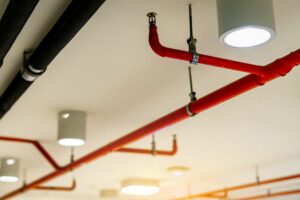
Cooking equipment is the leading cause of fires in commercial kitchens. The grease, high heat, and open flames that produce great food also produce the conditions for catastrophic loss. The hood suppression system is the only line of defense once a flare-up starts, and it must function within seconds of activation.
A failed inspection means more than a paperwork problem. Authorities having jurisdiction can order an immediate shutdown of cooking operations until deficiencies are corrected. Insurance carriers require current inspection certificates for coverage to remain valid. A lapsed inspection can mean closed doors, lost revenue, and an unprotected kitchen all at once.
What an NFPA 96 Hood Inspection Actually Covers
The semi-annual inspection is not a quick walk-through. A proper inspection follows a detailed protocol defined by NFPA 17A and NFPA 96. The technician arrives with specialized tools, replacement parts, and certification documentation.
Cylinder and Agent Verification
The wet chemical agent cylinder is checked for proper pressure, weighed if required by manufacturer specifications, and inspected for any external damage or corrosion. The discharge piping is examined from cylinder to nozzle.
Nozzle Placement and Condition
Every nozzle is checked against the manufacturer’s coverage diagram for the specific appliances below. Replacement of cooking equipment without updating the suppression layout is one of the most common compliance failures. Each nozzle gets a new protective cap and is verified clear of grease buildup.
Fusible Link Replacement
NFPA 17A requires fusible links to be replaced annually because grease vapor and heat exposure degrade the alloy over time. A link that fails to release at its rated temperature defeats the entire system. The technician replaces every link and documents the date.
Manual Pull Station Test
The manual pull station must be accessible, between ten and twenty feet from the protected appliances, and along the path of egress. Function is verified without discharging the system.
Gas and Electrical Shutoff Function
When the system activates, gas and electrical supply to cooking equipment must shut off automatically. The inspector verifies that micro-switches, gas valves, and shunt trip breakers respond correctly to a simulated activation.
Detection Line and Control Head
The detection cable or piping that runs through the hood is inspected for grease accumulation, kinks, and corrosion. The mechanical control head is examined for proper cocked position and condition.
Common Mistakes That Cause Failed Inspections
The same issues come up across kitchens of every size. Knowing them in advance is the easiest way to avoid a failed inspection.
- Changing equipment without updating the system. Adding a wok station, swapping a fryer for a charbroiler, or rearranging the cookline changes the hazard profile. Nozzle placement must match current appliances, not the layout from five years ago.
- Heavy grease buildup on nozzles. Grease covers nozzles, blocks discharge patterns, and signals an inadequate cleaning program. Inspectors document this and may fail the inspection.
- Blocked or relocated pull stations. The pull station gets covered by a coat rack, a delivery, or a new piece of equipment. Code requires accessible egress placement.
- Expired hood cleaning records. Hood cleaning is separate from suppression inspection but related. Inspectors often ask to see cleaning records to assess system condition.
- Skipped fusible link replacement. Annual replacement is mandatory. Some operators try to push to eighteen months. Inspectors check date tags on every link.
- Self-attempted resets after activation. After a discharge, the system must be recharged and recertified by a licensed technician before the kitchen reopens. DIY reset attempts are dangerous and non-compliant.
A regional chain recently faced a four-day closure across two locations because their suppression contractor had used non-listed replacement parts during a previous service. The next inspector flagged the parts, failed the certification, and the kitchens could not reopen until proper components were sourced and installed.
Wet Chemical vs Dry Chemical Hood Systems
Most modern commercial kitchen systems use wet chemical agent, but legacy dry chemical systems are still in service. The differences matter when planning maintenance and eventual replacement.
Wet Chemical Systems
- Current NFPA 17A and UL 300 listed standard
- Effective on modern high-efficiency cooking equipment
- Creates a saponification barrier on hot grease surfaces
- Lower cleanup impact after discharge
- Required for all new installations and most renovations
Legacy Dry Chemical Systems
- Pre-1994 designs no longer compliant with UL 300
- Less effective on high-temperature cooking oils
- Heavy cleanup impact after activation
- Many jurisdictions now require replacement during any major renovation
- Insurance carriers increasingly refuse coverage for legacy systems
If your facility still operates on a dry chemical system, plan for conversion. A licensed installer like Wilson Fire Equipment can quote a UL 300 compliant replacement and handle the design, permitting, and installation.
What to Do Before and After an Inspection
A successful inspection is partly about preparation. Walk through the following before the technician arrives.
- Clean the hood and cooking equipment. Grease-coated nozzles and heavy buildup signal a poorly maintained kitchen. A recent hood cleaning record helps.
- Verify equipment placement. Confirm cookline appliances are in the same positions documented in the system design.
- Locate prior inspection paperwork. Have the previous certification, any deficiency reports, and the system manual available.
- Clear access to cylinders and control heads. Storage often migrates over time. The technician needs unobstructed access.
- Notify staff. Brief the team that the inspection is happening and that there may be a brief test of the gas shutoff and manual pull.
After the inspection, file the new certificate where it is readily available for the fire marshal, health inspector, or insurance adjuster. Address any documented deficiencies immediately. A “punch list” left unresolved becomes a citation at the next inspection.
Why Choose Wilson Fire Equipment
Experience in Commercial Kitchen Environments
Wilson Fire Equipment services hood suppression systems for restaurants, hotels, hospitals, schools, corporate dining, and institutional kitchens. The cooking equipment variety we encounter, from open flame grills to high-volume fryer batteries to specialty wok lines, means our inspectors know what they are looking at.
Reliability That Keeps Your Kitchen Open
We schedule semi-annual inspections proactively and arrive with the parts needed for the most common service items. Fusible links, nozzle caps, and pressure components are on the truck. That means fewer return visits and less downtime for your operation.
Quality Service With Major System Platforms
Our technicians service Ansul R-102, Pyro-Chem Kitchen Knight II, Range Guard, and Amerex KP systems. Whether your kitchen has a recent installation or a system that has been in place for fifteen years, we maintain certification on the equipment you operate. See our kitchen suppression services for the full scope.
Service Coverage Built Around Foodservice Schedules
We schedule inspections around your service windows, including early morning and after-hours appointments that do not interrupt prep or dinner service. Multi-location restaurant groups receive coordinated scheduling and unified documentation. Book an inspection to get on the calendar.
Frequently Asked Questions
How often does my kitchen hood suppression system need inspection?
NFPA 96 and NFPA 17A require inspection every six months by a licensed fire suppression technician. Some jurisdictions also require additional documentation tied to fire marshal inspections of the overall facility.
What is the difference between hood cleaning and hood suppression inspection?
Hood cleaning removes grease from ducts, fans, and surfaces and is performed by a cleaning contractor. Hood suppression inspection verifies that the fire suppression system itself is functional and is performed by a licensed fire equipment technician. Both are required.
What happens if my hood system fails inspection?
Failed inspections require immediate correction. In many jurisdictions, the fire marshal will order cooking operations suspended until the deficiencies are repaired and a new certification is issued. Insurance carriers may also be notified.
Do I need a new suppression system if I renovate my kitchen?
Most renovations that change cooking equipment, hood configuration, or cookline layout trigger a system update or replacement. A pre-1994 dry chemical system will almost certainly need to be replaced with a UL 300 wet chemical system during any meaningful renovation.
What should I do after the suppression system discharges?
Call a licensed fire suppression company immediately. The kitchen cannot resume cooking operations until the system is professionally cleaned, recharged, and recertified. Notify your insurance carrier and document the cause and damage.